
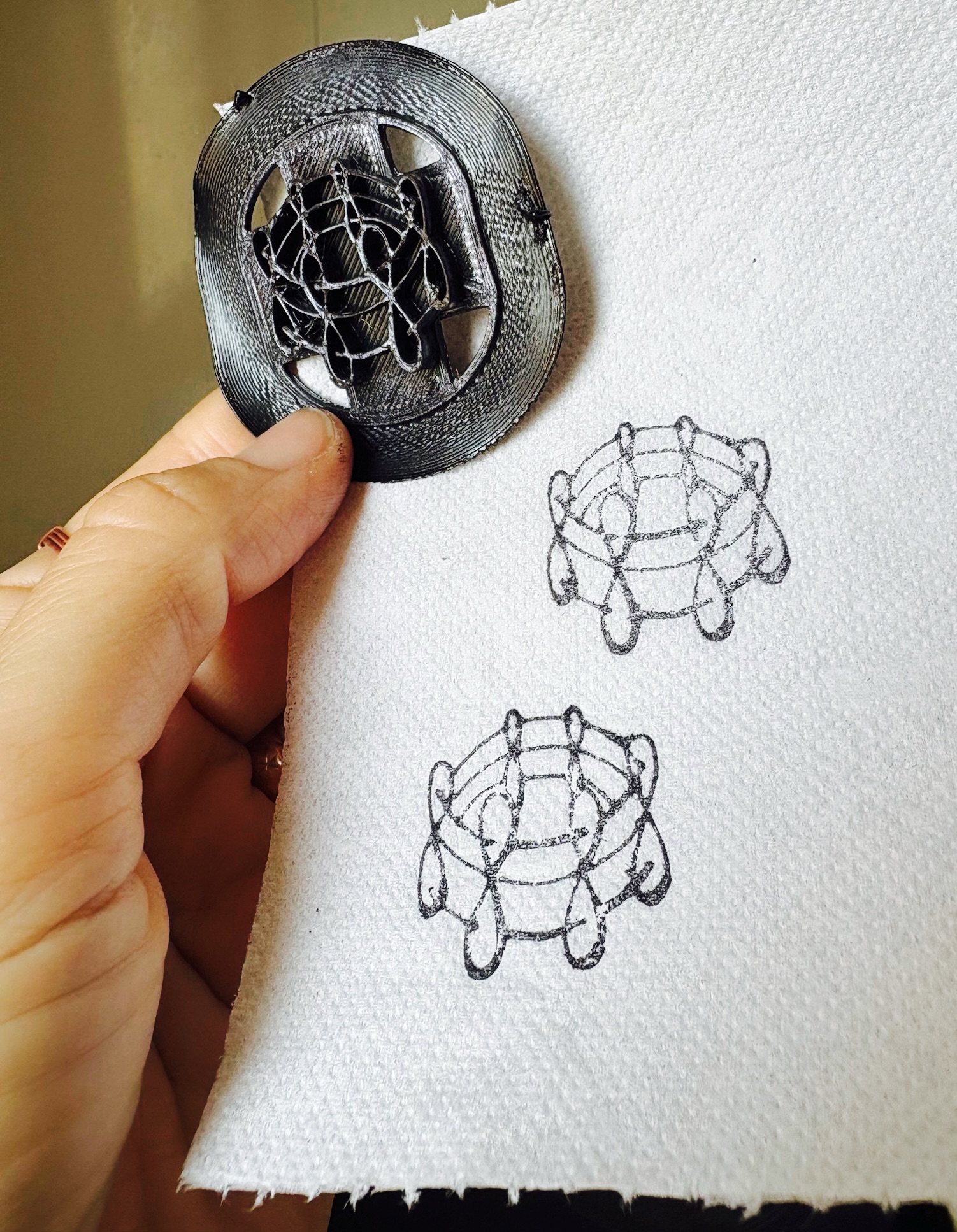
As a pharmacist and artist, I love combining chemistry with creative expression. Recently, I took one of my illustrations—a benzene molecule with its ring and p-atomic orbitals—and transformed it into a functional 3D-printed stamp.

The process started with vectorizing my original drawing, then bringing it into Blender to create a 3D model. Actually, I designed it as a polymer clay cutter, but I thought it should be able to function for a stamp, too. Depends on the material for printing.



I printed the stamp on my Anycubic Kobra 2 printer using TPU filament, which provided the right flexibility for inking and printing. At least I hoped so.

Testing it with different inks, I experimented with various surfaces and unexpectedly found that … hm… toilet paper worked exceptionally well for block printing. The texture and absorbency created crisp, detailed impressions of the molecule, adding an organic feel to the structured chemical design.

This project was a fun blend of science, technology, and art – turning a theoretical molecular structure into a tangible, creative tool. It’s a great reminder that inspiration can come from any field, and sometimes, unconventional materials may yield great results!
Thanks for reading. Until next time!
 Cute Strange Creatures